Latest News
- Wuxi's Nanchang Street--a historic cultural district that combines classical charm, delicious food, and fun activities
- chinese study
- lastest courses
- Business Assistance/International Consortium of Stem Cell Research
- Foreigner's view of Jiangsu -Changzhou Jintan starts
- estimonials for Our new French Internship student Anais 企业表扬信
- The Double Seventh Festival in China Introduction
- Chinese Proficiency Test (HSK)
- China University Mining and Technology
- Wuxi Library
Students Say
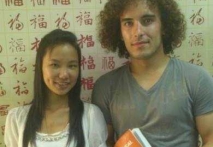
Mandarin Student Zack
Mandarin Education School is a great place to learn Chinese and Chinese Culture.I've learned a lot in this school, my Chine...

Learn Chinese Travel China
If you want to learn Chinese and also discover China, Mandarin Education organize the most funny and cultural study tour.
The...
suzhou Mandarin Jude
I am Jude, I am learning Mandarin in Suzhou Mandarin School,I was learning in Wuxi Mandarin Education too.I like my Chinse Teacher...
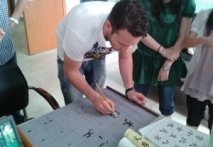
chinese class
Improve your reading, speaking and your writing by experiencing our teaching methods,Offer free student Visa.
...

Wuxi Mandarin Jessie
I've learned Chinese for almost 8 years, I can understand what Chinese people say,but when I speak, I feel very uncomfor...

Chinese Internship or Jobs
You are looking for a professional experience abroad? Get the opportunity to discover the Chinese business,Look for an ...
Mandarinedu Student Florent
I love my Wuxi Mandarin Education School. It is the EASY MANDARIN Learning way, I am learning faster than I wanted.My teach...

Mandarin E Learning
Mandarin Education School offers you Online Chinese Courses. It has never been so easier to have Chinese courses ...

Mandarin Student Brad
I am studying Chinese in Mandarin Education School. I can speak quit good Chinese and talk to Chinese people by myself. Thank...

Wuxi Mandarin edu. Student Jennifer
I love learning Chinese in Mandarin Education School.That's a great place to learn and make friends.
...
Add Our School Official
to get more informations

0086 1866 1199 988
0086 510-81151808
Sandy.Swun
519988808
Mandarin Education School
Room 405, 4 Fl,Building No.8,
Maoye Business Center,
Chang jiang No.1,
New district , Wuxi City , China
-
Home > Chinese knowledge > Why Chinese Makes You Choose: One “Uncle” in English, Five Words in Chinese
- Paternal or maternal: your father’s brother is shu, your mother’s brother is jiu. Same relation, completely different word.
- Older or younger: your father’s older brother is bofu, his younger brother is shushu. One character apart.
- Blood or marriage: your father’s sister is your blood relative (gugu); her husband is related by marriage (gufu).
- Bo versus shu is purely about age. Father’s older brother is bo, younger brother is shu. If your father was an only child, the distinction never comes up.
- Tang versus biao tracks the surname. Children of your father’s brothers share your surname, so they are tang; children of your sisters or of your mother’s side are biao. Under the traditional surname system, tang relatives are same-surname and biao relatives are not.
- Do not mix zhizi and waisheng. Your brother’s children are “inner” nephews and nieces; your sister’s children are “outer.” The direction matters.
- Father and son, brothers, husband and wife. The third-century commentator Wang Bi took this reading of the Daodejing’s “when the six kin are discordant.”
- Father and son, brothers, sisters, nephews and maternal uncles, parents-in-law and affines. The Zuozhuan tradition, widening the circle from the household into the marriage network.
- Father, mother, elder brother, younger brother, wife, children. The Han commentator Ying Shao’s gloss on the Hanshu, which later scholars favoured because it covers the closest ties by both blood and marriage.
- Ancient-script reading (same surname): from great-great-grandfather down to great-great-grandson — nine generations in a straight paternal line. This is the version in the San Zi Jing, the classic children’s primer, and the one most familiar to ordinary readers.
- Modern-script reading (three clan groups): four clans on the father’s side, three on the mother’s, two on the wife’s. The father’s four cover the paternal line itself plus the families of a married-out paternal aunt, a married-out sister, and a married-out daughter; the mother’s three cover the maternal grandparents’ households and the families of maternal uncles and aunts; the wife’s two cover her parents’ households.
Almost every Chinese teacher has fielded this question: “My father’s younger brother — is that uncle shushu or uncle bo?” And it only gets worse from there. Mother’s brother is jiujiu. Father’s sister’s husband is gufu. Mother’s sister’s husband is yifu. In English, every one of these people is simply “uncle.”
1. It is not a vocabulary problem. It is a system.
Beginners tend to treat Chinese kinship terms as a word list to be memorised. That approach fails, because the terms were never a list — they are a classification system that sorts every relative along three axes at once:
Once the three rules click, the scattered words resolve into a table you can derive. And this system is far older than most learners assume.
2. The eighteen generations: a two-thousand-year-old positioning system
Chinese has a saying about “zugong shiba dai” — eighteen generations of ancestors and descendants. It does not mean eighteen literal forebears. Taking yourself as the origin, the system counts nine generations upward and nine downward:
Upward: father, grandfather, great-grandfather, and so on through six further steps, ending at the “founder ancestor” (bizu). Downward: son, grandson, great-grandson, continuing through six more steps, ending at the ninth-generation descendant, “erson” (ersun). The earliest surviving Chinese dictionary, the Erya, already contains a chapter on kinship terms, with material accumulated between the Warring States and Han periods — the first reliable record of this system.
The naming logic is refreshingly concrete. Ancient commentators believed the nose is the first part of the body to take shape in the womb, so the most distant ancestor is the “nose ancestor.” A generation so far away that you can only have heard of it is the “ear grandson.” Distance was measured by what the senses could still reach:
| Term | Refers to | Logic of the name |
|---|---|---|
| Bizu (鼻祖) | The founding ancestor | The nose is the first feature formed in the womb |
| Yuanzu (远祖) | Very remote ancestors | “Yuan” means distant |
| Gaozu (高祖) | Great-great-grandfather | “Gao” implies height and distance |
| Zengzu (曾祖) | Great-grandfather | “Zeng” means stacked — one layer above grandfather |
| Ersun (耳孙) | Ninth-generation descendant | So remote you can only hear of them (Han commentary) |
Two rare characters are worth knowing if you will ever read genealogies or classical texts: kunsun (晜孙, where 晜 is an old form of 昆, “elder brother”) and rengsun (仍孙, “successive descendant”). Neither is used in daily speech today.
3. The table learners actually need
Eighteen generations are cultural background. Daily conversation uses a much shorter list — and it becomes far easier once you sort it by the three rules above:
| Relation | Term | Relation | Term |
|---|---|---|---|
| Father’s father | Yeye (grandpa) | Mother’s father | Waigong (maternal grandpa) |
| Father’s mother | Nainai | Mother’s mother | Waipo |
| Father’s older brother | Bofu | Mother’s brother | Jiujiu |
| Father’s younger brother | Shushu | Mother’s sister | Ayi |
| Father’s sister | Gugu | Elder brother’s wife | Saozi |
| Elder sister’s husband | Jiefu | Brother’s son | Zhizi (nephew) |
| Sister’s son | Waisheng (nephew) | Brother’s daughter | Zhinü (niece) |
Three traps worth flagging:
4. Five mourning grades: how the ancients ranked relatives
Older Chinese will say a distant relative has “left the five grades” (chu le wufu) — meaning the families share an ancestor, but no longer count as close kin. The five grades originally referred to five levels of mourning dress in traditional funerals: the closer the relative, the heavier and longer the mourning. From heaviest to lightest:
| Grade | Approximate mourning period | Examples |
|---|---|---|
| Zhan cui (斩衰) | Three years | Son for father; wife for husband |
| Qi cui (齐衰) | One year or less | Grandson for grandparents; husband for wife |
| Da gong (大功) | Nine months | Cousins on the paternal side; married-out sisters |
| Xiao gong (小功) | Five months | Great-uncles and great-aunts; uncles and aunts |
| Si ma (缌麻) | Three months | Parents-in-law; distant cousins |
People soon noticed this system could answer another question — “how closely related are we, exactly?” — and wufu gradually shifted from a dress code to shorthand for degrees of kinship. Inside the five grades means close kin; outside them means distant. The exact durations varied by dynasty; the table follows the version most commonly cited in traditional sources.
5. Six kin: the term with the most definitions
If the eighteen generations are settled, liuqin (“six kin”) is the opposite: commentators have never agreed on a single list. The main candidates:
Today liuqin simply means close relatives in general, and the idiom “liuqin buren” — “not recognising six kin” — describes someone who cuts off family ties without scruple. Ironically, the term survived precisely because it was never fixed.
6. Nine kin: a two-millennium scholarly argument
Everyone knows the phrase “punished to the ninth degree of kin” (zhu lian jiu zu), but which nine clans? Since the Han dynasty there have been two rival readings, known as the “modern-script” and “ancient-script” interpretations:
The disagreement was never academic in the modern sense: under the ancient punishment of collective execution, it decided whether only same-surname relatives were killed, or whether in-laws were included too. The family in ancient China was not only a household — it was a legal unit of responsibility.
7. Why this is worth a learner’s time
Most of these terms are no longer spoken, but they are not dead. They live in idioms, in clan genealogies and ancestral halls, in the etiquette of Spring Festival and Qingming tomb-sweeping, and in the unspoken sense of seniority that still shapes a Chinese dinner table. Knowing the difference between shushu and jiujiu is vocabulary. Knowing why Chinese sorts relatives this way is culture — it will not pass an exam for you, but it will keep you out of trouble at dinner.
At Mandarin Edu (Yufeng), the culture course that follows the elementary stage takes kinship terms, etiquette and taboos, and festival customs as standing topics, and one-to-one lessons can be built around whatever interests you most. If you are preparing for HSK or want to move from “can converse” to “never puts a foot wrong,” get in touch.
Ready to plan your Chinese learning?
Mandarin Edu runs centres in Wuxi, Changzhou and Suzhou, offering HSK preparation, Business Chinese, corporate training and short-term study programmes. First consultation is free.
